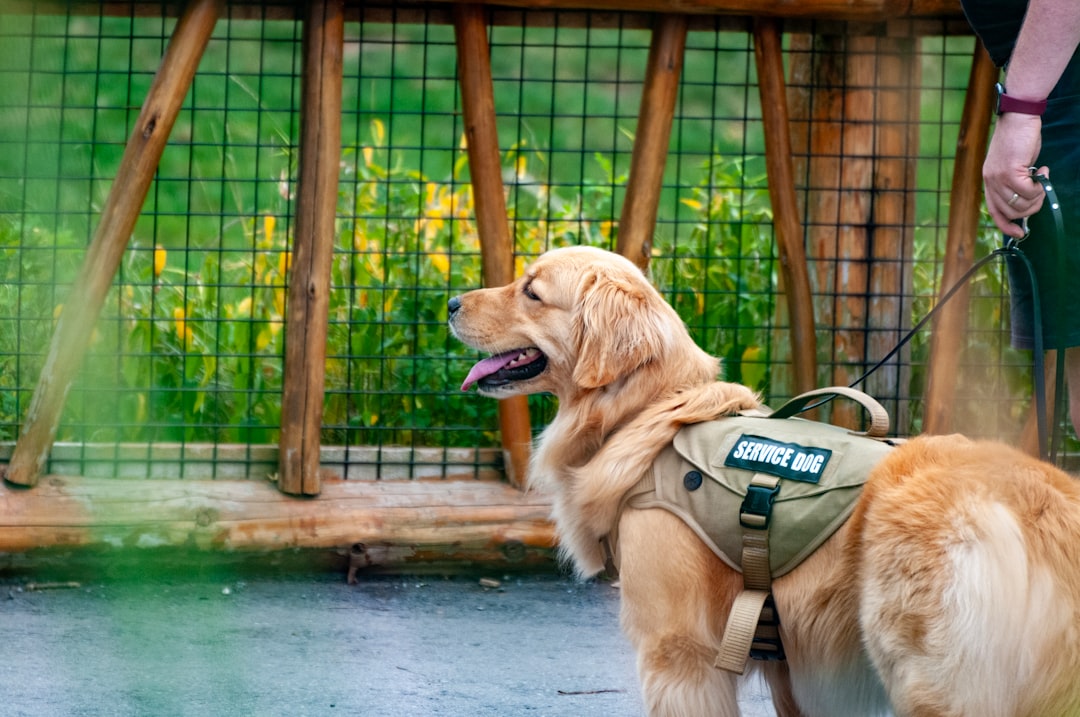
I have been training service dogs for more than 15 years. In that time, the single most common mistake I see from handlers, trainers, and even well-intentioned program directors is treating working dog fatigue as a behavioral problem rather than a physiological one. When a dog starts making errors at hour three of a public access session, the instinct is to correct or re-cue. My instinct is to end the session and document what I observed, because what I am watching is not a training gap. It is cortisol.
Understanding working dog welfare at the physiological level changed how I design every training session I run through TheraPetic® Healthcare Provider Group. It also changed how I think about the 4-hour mark specifically. That threshold is not arbitrary. It is grounded in what veterinary behaviorists have established about the hypothalamic-pituitary-adrenal (HPA) axis, stress hormone clearance rates, and cumulative neurochemical load in working animals.
Why Four Hours Is the Threshold I Treat as Non-Negotiable
Public access work is not the same as a leisurely walk. A working dog navigating a crowded hospital, a shopping center, or a transit hub is processing constant novel stimuli, suppressing natural investigative and social behaviors, maintaining positional precision relative to the handler, and monitoring for task triggers. All simultaneously. That is a profound cognitive and physiological demand.
The 4-hour mark matters because of how cortisol secretion patterns interact with sustained arousal. In healthy working dogs, the HPA axis begins producing measurable cortisol elevation within the first 60 to 90 minutes of moderate-to-high demand environmental exposure. That elevation is adaptive. It sharpens attention, increases cardiovascular efficiency, and supports alertness. Past the 2-hour mark, the picture starts to shift. The dog's capacity to modulate that cortisol response through normal behavioral outlets, sniffing, movement variation, social interaction, is increasingly constrained by the demands of the working role itself.
By hour four, most working dogs I have assessed are operating with a cortisol burden their parasympathetic nervous system cannot balance in real time. What looks like distraction or non-compliance on the surface is neurochemical saturation. I treat four hours as the hard ceiling on any public access training session, and I watch for pull indicators well before that mark.
What Cortisol Curves Actually Look Like in Working Dogs
Veterinary behaviorists have described a characteristic cortisol curve in working and shelter dogs that I find essential for any trainer to understand. Salivary and urinary cortisol measures, the primary noninvasive tools researchers use, show a reliable pattern: a rapid rise during the first 30 to 60 minutes of a stressor, a plateau phase, and then either a return toward baseline if the stressor resolves or a prolonged elevation if it continues.
The key insight from veterinary behavioral science is that cortisol does not return to baseline the moment the stressor ends. Research from the veterinary behavioral community. Including work discussed by board-certified veterinary behaviorists through the American College of Veterinary Behaviorists (ACVB). Has consistently documented that cortisol clearance in dogs takes anywhere from several hours to multiple days depending on the intensity and duration of the stressor. A dog that finishes a 6-hour public access deployment on a Monday may still have elevated baseline cortisol on Tuesday morning.
That carryover is what I call the recovery debt. When handlers schedule back-to-back full-day deployments without accounting for this debt, they are not training a rested dog. They are training a dog whose HPA axis is already primed for amplified stress responses. The behavioral consequences are predictable: lower threshold for startle, reduced task latency precision, increased scanning behavior, and in dogs with any prior stress history, regression of previously solid task behaviors.
HPA Axis Load and Why Single-Day Recovery Often Fails
The HPA axis. The hormonal signaling loop connecting the hypothalamus, the pituitary gland, and the adrenal glands. Is the central architecture of the mammalian stress response. When a dog perceives a stressor, the hypothalamus releases corticotropin-releasing hormone (CRH), which signals the pituitary to release adrenocorticotropic hormone (ACTH), which in turn drives cortisol secretion from the adrenal cortex. This cascade is elegant and fast. The downregulation, though, is slow.
Glucocorticoid receptors in the brain, particularly in the hippocampus and prefrontal cortex, provide negative feedback that eventually tells the hypothalamus to reduce CRH output. Under normal low-level stress, this feedback loop functions well. Under sustained or repeated high-intensity stress, those same receptors can become functionally desensitized. The result is a dog that continues producing elevated cortisol even in the absence of an active stressor, because the downregulation signal is no longer landing efficiently.
This is the physiological basis for what trainers sometimes describe as a dog that "never fully comes back" after a difficult deployment. It is not a training failure. It is a receptor-level consequence of exceeding the dog's cumulative stress tolerance without adequate recovery. Single-day rest, 24 hours off, does not restore receptor sensitivity after a severe HPA axis load event. The veterinary behavioral literature supports rest periods of 48 to 72 hours with active decompression (free-roaming sniff time, low-demand positive reinforcement play) for full neurochemical recovery after high-demand extended work.
The Fatigue Markers I Watch for in Real Time
Identifying cortisol-driven fatigue requires watching the dog, not the clock. The clock gives me a ceiling. The dog's behavior gives me the actual pull signal. Over 15 years of working with psychiatric service dogs, mobility assistance dogs, and medical alert dogs, I have developed a consistent list of markers that tell me the HPA axis is under unsustainable load.
- Increased response latency: A dog that previously responded to a cue in under 2 seconds and is now taking 4 to 6 seconds is showing early cognitive fatigue. The neural circuitry is still intact but firing more slowly under neurochemical load.
- Displacement behaviors in sterile environments: Sudden yawning, lip licking, scratching, or sniffing the floor in contexts where those behaviors are not environmentally motivated are classic calming signal cascades. These are the dog's autonomic nervous system attempting self-regulation.
- Loss of positional precision: Heel position drifts, down stays compress, front position becomes asymmetrical. The motor programs are degrading under fatigue. The same way a fatigued human athlete loses form before losing speed.
- Reduced eye contact and check-in frequency: A well-conditioned working dog checks in with the handler frequently. When that frequency drops, the dog's attentional resources are being routed elsewhere. Typically toward environmental monitoring as arousal increases.
- Hypervigilance or startle amplification: A dog that flinches at a sound it ignored 90 minutes earlier is showing a lowered threshold. A direct cortisol effect on the amygdala's fear circuitry.
- Refusal or avoidance of task performance: When a dog that knows a task perfectly begins hesitating or offering alternative behaviors, the cognitive load of task execution has exceeded available resources. This is not stubbornness. This is fatigue.
I log these markers in real time using a structured session observation form I developed for our training programs at officialservicedog.com Training Plus. Pattern recognition across sessions is as important as in-session observation. A dog that consistently shows marker two at the 2.5-hour mark needs a different session structure, not more repetition.
When I Pull a Dog from Training. And Why I Do It Early
My pull threshold is the second confirmed fatigue marker. Not the third. Not "let's see if it self-resolves." Two distinct markers in the same observation window means the cortisol curve has already turned against us, and continuing to ask for performance is training under aversive neurochemical conditions. Even if every training tool being used is positive and reward-based.
This matters for a reason that goes beyond immediate welfare. Learning science is unambiguous about what happens when behavior is practiced under stress: the stress becomes part of the conditioned context. A dog that repeatedly performs a task while cortisol-saturated begins to associate the task environment, the public spaces, the handler's cues, the working harness, with that physiological state. Over time, the working context itself becomes a cortisol trigger. I have seen this produce dogs that show measurable stress indicators the moment the vest goes on. That is a training outcome, not a temperament limitation, and it is avoidable.
Pulling early and pairing the end of the session with a genuine decompression protocol is not weakness in a training program. It is precision. The dog learns that working sessions have a clear end, that the end is followed by relief, and that the vest-off signal predicts good things. That association is protective against the very conditioned stress cascade I am trying to prevent.
Recovery Protocols That Actually Match the Physiology
Recovery is not rest. Rest is part of recovery, but passive rest in a crate does not drive parasympathetic activation with the same efficiency as specific decompression activities. The veterinary behavioral literature, and my own longitudinal observation of working dogs across extended deployments, supports a structured recovery protocol that addresses both the neurochemical and behavioral dimensions of fatigue.
The first component is decompression time in a low-stimulus environment with full behavioral freedom. No cues, no expectations, no handler engagement beyond calm presence. The dog sniffs, moves, rests, and self-regulates. For dogs with high cortisol loads, this phase alone can take 45 to 90 minutes before I see the physiological markers of parasympathetic dominance. Slow blinking, relaxed ears, loose muscle tone, unprompted stretching.
The second component is restorative play or sniff-based activity at the dog's initiation. Research on canine olfactory engagement. Explored through the work of veterinary behaviorists and applied animal behavior researchers examining nose work and environmental enrichment. Consistently shows that sniff-heavy activity drives parasympathetic tone and reduces salivary cortisol measures in dogs. I use structured sniff walks or dissection-style foraging games as a tool, not just enrichment.
The third component is sleep protection. Working dogs need uninterrupted sleep after high-demand sessions. Memory consolidation, motor program restoration, and HPA axis downregulation all depend on sleep quality. I advise handlers to protect the dog's sleep environment for a minimum of 8 hours post-session and to avoid re-exposure to working stimuli during that window.
Building a Welfare Framework Around Stress Physiology, Not Tradition
The traditional approach to working dog training has often treated long sessions as badges of rigor. "The dog needs to handle real-world demands" is a phrase I hear from trainers who mean well but are inadvertently building stress associations into their dogs' working identity. Real-world demands are real. The solution is not to expose dogs to those demands without physiological support. It is to build the dog's stress tolerance progressively, with recovery intervals that match the actual biology.
At TheraPetic®, my welfare framework for every service dog in active training includes session length limits tied to the individual dog's demonstrated stress tolerance, not a generic program calendar. A young dog in early public access training may hit two fatigue markers at 90 minutes. A seasoned dog with years of conditioned resilience may comfortably work 3.5 hours before markers appear. Both outcomes are appropriate. What is not appropriate is ignoring the markers because the training schedule says to keep going.
The International Association of Canine Professionals (IACP), through whose credentialing body I hold my CSDT #6202, has increasingly emphasized evidence-based welfare standards in working dog programs. The field is moving, slowly, toward treating cortisol and HPA axis science as foundational knowledge for working dog trainers, not a niche concern for veterinary behaviorists alone. I believe that shift is long overdue.
Every handler I work with through our programs receives training on reading their dog's fatigue markers before they ever enter a public access environment. Not because I expect them to become amateur endocrinologists, but because the behavioral signals that cortisol produces are readable, consistent and learnable. Protecting working dog welfare past the 4-hour mark starts with knowing what to watch for well before that mark arrives.