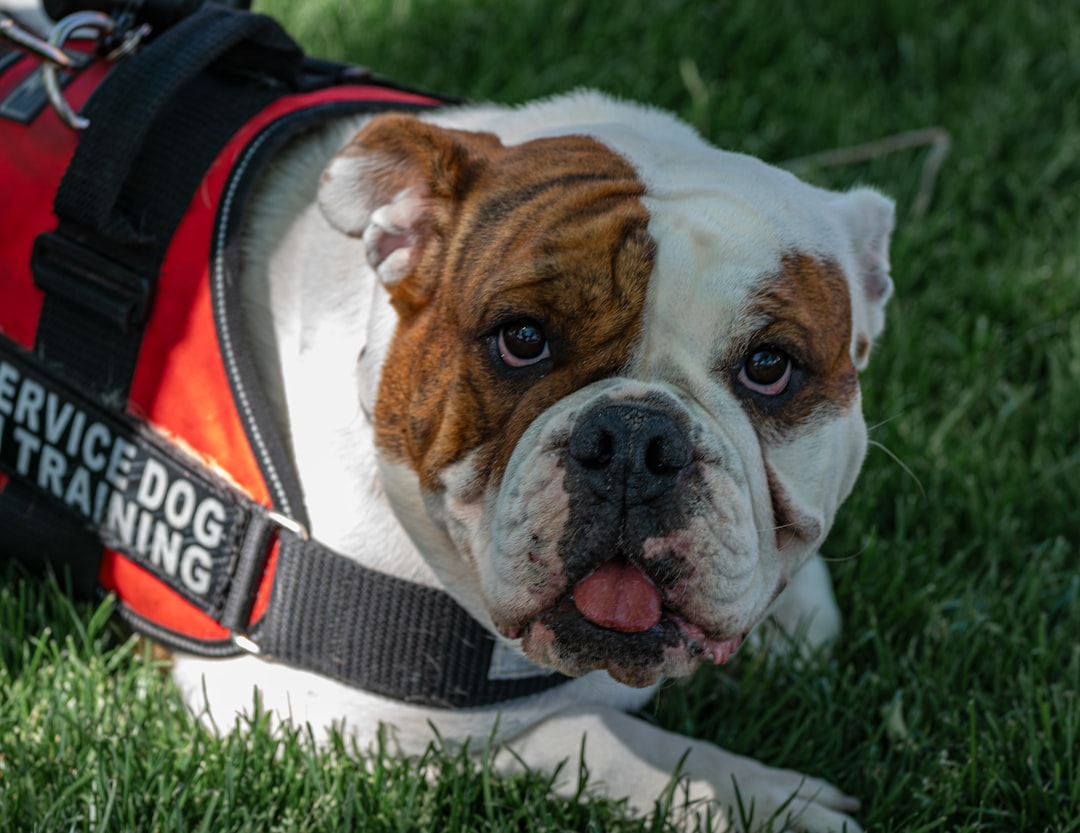
After fifteen years of observing handler-dog teams across every conceivable setting, I can spot communication breakdowns from across a crowded airport terminal. The most successful partnerships operate on a level of nuanced signaling that goes far beyond basic obedience cues. What separates novice teams from experienced partnerships is not the complexity of tasks performed, but the sophistication of ongoing micro-communications that prevent problems before they manifest.
Most handlers focus on the dramatic signals: obvious stress panting, clear displacement behaviors, or outright task refusal. But the real conversation happens in the milliseconds before these obvious indicators appear. Understanding this subtle layer of communication transforms a functional team into an exceptional one.
Microexpressions That Signal Stress Before Obvious Displacement
The most critical skill I teach handlers is recognizing stress indicators before they escalate into visible displacement behaviors. Dogs telegraph their emotional state through facial microexpressions that last mere fractions of a second, but these brief signals provide invaluable data about their mental state.
The corner lip tension I observe in working dogs appears 3-5 seconds before any obvious stress panting begins. This subtle tightening at the commissure of the mouth indicates the dog is processing environmental pressure but has not yet shifted into reactive mode. Experienced handlers learn to read this early warning sign and immediately assess what environmental factor triggered the tension.
Ear positioning provides another layer of early stress detection that novice handlers consistently miss. The quarter-second backward flick of ear leather indicates uncertainty about handler expectations. This is not the obvious backward ear position that signals fear or submission, but rather a micro-adjustment that suggests the dog is seeking clarification about task parameters.
Eye contact patterns reveal stress levels more accurately than breathing or posture changes. When a working dog briefly breaks eye contact and looks past their handler's shoulder, they are processing an environmental distraction that may interfere with task performance. This sideways glance lasts less than half a second but indicates the dog's attention is becoming divided.
The most subtle indicator I track is what I term "cognitive pause" - a momentary stillness where the dog stops all movement for 1-2 seconds while maintaining position. This pause indicates the dog is reassessing situational demands and questioning whether current task parameters are sustainable. Handlers who recognize cognitive pause can provide clarification or environmental management before stress escalates.
Handler Positioning and Unconscious Pressure Signals
Handler positioning creates unconscious pressure patterns that most teams never recognize. After observing thousands of handler-dog interactions, I have identified specific spatial relationships that consistently undermine effective communication.
Forward body lean creates invisible pressure that dogs interpret as urgency or anxiety. Handlers often unconsciously lean forward when concentrating on environmental assessment, but this posture signals the dog that the handler perceives threat or challenge in the environment. Even a 15-degree forward lean changes the dog's stress baseline and can trigger hypervigilance.
Shoulder tension translates directly through the leash connection, regardless of actual leash pressure. Dogs feel muscular tension through equipment contact points before handlers realize they are creating pressure. I consistently observe dogs adjusting their gait or position in response to handler shoulder tension that the handler is completely unaware of transmitting.
Foot positioning affects team dynamics more than most handlers realize. When handlers consistently favor one foot or shift weight unconsciously, dogs begin to anticipate direction changes based on these subtle weight distribution patterns. This creates a secondary communication system that can interfere with trained directional cues.
Breathing patterns influence canine stress levels through both scent and energy transmission. Shallow or rapid breathing patterns signal anxiety to dogs even when handlers maintain calm external presentation. Dogs respond to human respiratory patterns within seconds, often before handlers recognize their own stress escalation.
Early Warning Signs of Task Redirection
Task redirection behaviors develop gradually through subtle patterns that experienced handlers learn to interrupt before they become entrenched. The key is recognizing when a dog begins to modify trained behaviors to avoid specific environmental challenges rather than addressing them directly.
Speed variation during familiar tasks indicates the dog is developing task-specific anxiety. When a dog consistently performs a task more slowly in certain environments, they are signaling that environmental factors are creating uncertainty about task execution. This speed reduction is an early attempt at task modification rather than task performance.
Positioning drift during stationary tasks reveals environmental pressure patterns. Dogs who gradually shift position during extended stays or settles are responding to environmental stimuli that handlers may not consciously notice. This positional adjustment represents the dog's attempt to manage environmental pressure while maintaining task compliance.
Eye contact avoidance during task initiation signals that the dog is questioning task relevance or feasibility in the current environment. This is different from obvious task refusal and appears as a brief delay in establishing handler focus before task execution. Dogs displaying this pattern require environmental assessment and possible task modification rather than correction.
The most concerning pattern I observe is what I call "compliance without engagement" - dogs who perform tasks mechanically without the focused attention that characterizes effective working partnerships. These dogs execute trained behaviors but lack the problem-solving engagement that allows them to adapt tasks to environmental variables.
Environmental Reading Skills Most Handlers Miss
Environmental awareness represents the foundation of effective team communication, but most handlers focus on obvious distractions while missing the subtle environmental factors that most significantly impact their dog's performance and stress levels.
Sound layering creates environmental pressure that accumulates gradually rather than presenting as obvious noise distractions. Background conversation, HVAC systems, traffic patterns, and electronic device sounds combine to create acoustic pressure that affects canine concentration. Dogs begin showing subtle stress indicators in response to sound layer buildup before any individual noise becomes obviously problematic.
Air current patterns carry scent information that dramatically affects canine environmental assessment. Dogs respond to scent trails from food preparation, cleaning chemicals, other animals, and human activity that handlers cannot detect. Understanding how air movement distributes scent information helps handlers predict when their dog may become distracted or stressed by olfactory input.
Spatial density affects working dogs differently than handlers expect. The issue is not simply crowding, but rather the rate of spatial change as people move through an environment. Rapidly shifting human movement patterns create visual and energetic disruption that requires constant canine readjustment and environmental reassessment.
Lighting transitions impact canine visual processing and stress levels more than most handlers recognize. Artificial lighting, shadow patterns, and reflection from windows or surfaces create visual complexity that requires ongoing cognitive processing. Dogs working in environments with significant lighting variation must continually readjust their visual assessment capabilities.
Handler Habits That Undermine Trained Work
The most persistent training challenges I encounter stem from unconscious handler habits that contradict trained communication patterns. These habits develop gradually and often persist because they feel natural to the handler while confusing the dog.
Verbal overflow represents the most common communication error I observe. Handlers begin adding extra verbal cues, encouragement, or commentary during task performance, creating auditory clutter that interferes with trained verbal markers. Dogs trained to respond to specific verbal cues become confused when those cues are embedded in streams of additional verbiage.
Anticipatory cueing undermines the dog's environmental assessment capabilities. Handlers who consistently cue tasks before the dog indicates readiness or environmental awareness prevent the dog from developing independent problem-solving skills. This creates dependency patterns that reduce the dog's effectiveness in novel situations.
Inconsistent release criteria confuse dogs about task completion expectations. When handlers sometimes release dogs immediately after task completion and sometimes require extended maintenance, dogs cannot predict task duration requirements. This uncertainty creates stress during task performance as dogs cannot anticipate when task demands will end.
The most damaging pattern I observe is emotional rescue - handlers who provide comfort or reassurance when dogs show subtle stress indicators. This well-intentioned response reinforces stress behaviors and teaches dogs that displaying stress results in handler attention and environmental relief. Dogs learn to amplify stress signals rather than developing coping strategies.
Advanced Communication Patterns in Seasoned Teams
The most sophisticated handler-dog partnerships develop communication patterns that allow for real-time task modification and environmental adaptation without breaking the working relationship. These advanced patterns emerge only after years of consistent communication and mutual trust-building.
Predictive signaling allows experienced teams to anticipate environmental challenges before they impact task performance. The handler learns to read environmental cues that predict when their dog will need support or task modification, while the dog learns to signal environmental assessment results to help the handler make navigation decisions.
Flexible task parameters represent the hallmark of advanced partnerships. Rather than rigid task execution, experienced teams develop the ability to modify task performance based on environmental demands while maintaining task effectiveness. This requires sophisticated communication about when and how tasks can be adapted without compromising their functional purpose.
Recovery communication protocols help advanced teams manage stress or confusion without breaking the working relationship. When problems occur, experienced teams have established communication patterns for resetting focus, clarifying expectations, and returning to effective task performance without extended corrections or training sessions.
Environmental partnership develops when both handler and dog contribute environmental assessment information that improves team navigation and task success. The dog provides sensory information about environmental factors the handler cannot detect, while the handler provides cognitive assessment of social and logistical environmental factors that affect team movement.
The evolution from novice to expert partnership requires hundreds of hours of consistent communication practice and environmental exposure. Teams that achieve this level of communication sophistication can adapt to virtually any environmental challenge while maintaining effective task performance and mutual trust. This represents the ultimate goal of handler-dog team development and the foundation of truly exceptional service dog partnerships.