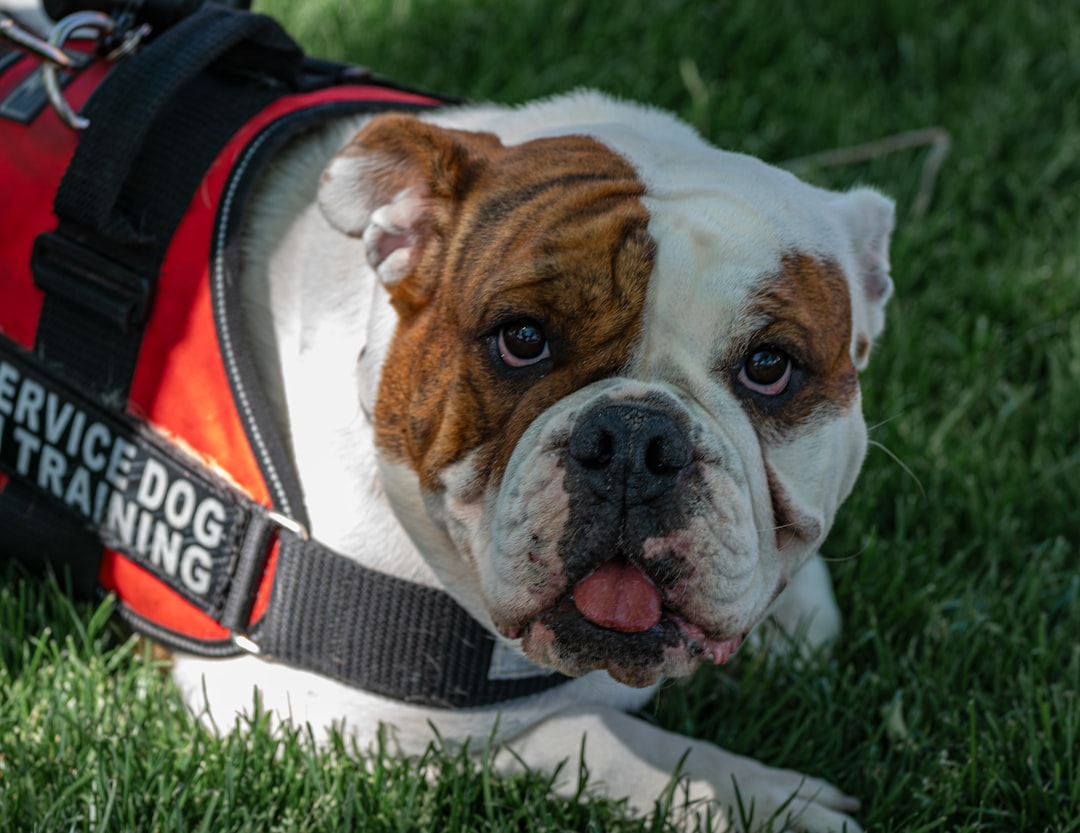
After fifteen years of watching handler-dog teams work, I can tell within about ninety seconds whether a team is genuinely communicating or whether the handler is running a one-way broadcast. Both can look polished on the surface. A dog can respond to cues reliably in a quiet training environment while the handler remains completely blind to what the dog is actually saying back. That gap is where real problems live, and it is the gap I spend most of my time as a Certified Service Dog Trainer (CSDT) trying to close.
Handler-dog communication is not a one-directional skill. The handler gives cues, yes. But the dog is generating constant output that most handlers are not trained to receive. Fixing that is not complicated. It just requires knowing what to look for.
What Novices Miss in the First Six Months
New handlers almost universally focus on compliance. Did the dog sit? Did the dog retrieve the item? Did the dog hold a stay? Those are outcome measurements and they matter, but they tell you almost nothing about the quality of the communication happening underneath the behavior.
What I watch instead is the dog's body during the moment between stimulus and response. That fraction of a second before the dog moves is where you learn everything. Is the dog anticipating joyfully, weight shifting forward, ears soft? Or is the dog complying reluctantly, weight shifted slightly back, jaw tight, eyes slightly harder than baseline?
Novice handlers interpret both as success. They got the behavior. Experienced handlers interpret them very differently, because one of those dogs is building a positive reinforcement history with that task and the other is beginning to develop mild avoidance. Over hundreds of repetitions, that difference becomes enormous.
The other thing novices miss consistently is the dog's behavior in the seconds immediately after task completion. A dog that sniffs the floor, shakes off, yawns or looks away right after finishing a task is not being rude. The dog is signaling something about the experience of doing that task. Ignoring those signals repeatedly teaches the dog that its communication is irrelevant, which over time produces either shutdown or escalated signaling.
Canine Microexpressions and What They Actually Mean
The term microexpression comes from human behavioral science, but the concept applies directly to dogs. A microexpression in a dog is a facial or postural change that lasts less than two seconds before the dog returns to neutral or shifts into another behavior. Most handlers miss them entirely because they are not watching for them. Experienced handlers see them because they have trained themselves to watch the face and the body simultaneously.
The ones I consider most diagnostically useful in a service dog team:
- The lip lift that disappears before anyone registers it consciously
- A single ear rotation toward an unexpected stimulus while the rest of the body stays still
- A brief hardening of the eye, sometimes called whale eye in its more extreme form, that appears and disappears in under a second
- The commissure of the mouth pulling backward slightly, what some trainers call a stress grin, when a cue is delivered
- A momentary pause in respiration followed by a deeper breath
None of these signals, in isolation, represents a welfare crisis. Together, over a training session or a public access outing, they form a pattern that tells me exactly how much the dog is managing versus thriving. I track them the same way a clinician tracks vitals. Individual readings matter less than trends.
Redirection Signals Are Not Disobedience
This is the mistake I see most often from handlers who are six to eighteen months into working with their dog. The dog sniffs during a heeling pattern, the handler corrects. The dog glances toward another dog at distance, the handler corrects. The dog slows slightly approaching a high-traffic area, the handler applies leash pressure forward. All of that looks like training. From a communication standpoint, a significant portion of it is the handler systematically punishing the dog for talking.
Redirection signals, sometimes called calming signals following Turid Rugaas's foundational work in this area, are the dog's attempt to manage its own emotional state or to communicate information about the environment. A dog that sniffs intensely near a food court entrance is not blowing off a heel cue. The dog is processing an olfactory load that is, from a neurological standpoint, genuinely demanding. The correct handler response is to note the signal, assess whether the environment is appropriate for the team's current training level and make a decision about whether to continue, adjust or exit.
Correcting redirection signals without reading them first produces one of two outcomes. Some dogs suppress the signals and continue working while their internal stress climbs invisibly. Those dogs are the ones that seem to fail suddenly, out of nowhere, which experienced people in the field know is never actually out of nowhere. Other dogs escalate the signals until the handler cannot ignore them, which leads to corrections for behaviors that were always present and always communicative.
At OfficialServiceDog.com Training Plus, we build explicit signal-reading curricula into handler education at every level, because the field has historically underweighted it. Compliance training without communication literacy is incomplete preparation for a working team.
The Handler Habits That Quietly Destroy Trained Work
I want to be direct here because this section is where handlers sometimes get defensive. The most common source of breakdown in a service dog team is not the dog. It is handler behavior that has drifted over time without the handler noticing. Every team I have assessed over fifteen years shows some version of this.
The habits that cause the most erosion:
- Repeating cues. Saying "sit, sit, sit" instead of cueing once and waiting teaches the dog that the first cue is not the operative signal. Compliance drops, the handler cues more, the dog waits for repetition. This cycle runs in every novice team I have ever observed.
- Inconsistent release cues. If the dog is sometimes released from a stay with "okay" and sometimes drifts out of position with no consequence and no formal release, the dog correctly concludes that duration behaviors are negotiable. In public access, negotiable duration behaviors become a liability.
- Emotional leakage during task sequences. Anxiety, frustration or physical tension in a handler transmits directly through the leash and through postural changes the dog reads expertly. A handler who is nervous in a medical environment and simultaneously asking for calm work from the dog is sending contradictory information. The dog resolves the contradiction, usually in favor of the handler's emotional state rather than the cue.
- Reinforcement timing drift. Early in training, most handlers mark and reward with precision. Over months, the mark drifts later and later. By the time I see some teams, the reinforcer is arriving three to five seconds after the behavior, which from a behavioral science standpoint is reinforcing something entirely different from what the handler intends.
Cue Poisoning and Why It Happens Slowly
Cue poisoning is a specific mechanism worth naming directly. It occurs when a cue that was originally trained as a neutral or positive predictor becomes associated with aversive outcomes often enough that the dog begins to show avoidance or stress when the cue is delivered. It is not dramatic. It accumulates over weeks or months of small inconsistencies.
The most common scenario I see: a handler uses the dog's name to call the dog and then does something the dog finds unpleasant, whether that is a nail trim, a correction, ending a play session or administering medication. The name, which should function as a universal attention cue with positive valence, begins to predict a mixed bag of outcomes. The dog starts pausing before responding to its name. The handler perceives this as the dog being stubborn or distracted. Corrections follow. The cue degrades further.
The fix is straightforward once identified: a systematic name rehabilitation protocol, rebuilding the association between the name cue and high-value outcomes while temporarily removing the name from contexts where it precedes anything the dog finds unpleasant. It takes time, but it works reliably if the handler understands what they are doing and why.
Reading Stress Before the Dog Shuts Down
One of the most valuable things fifteen years of direct observation has taught me is that dog shutdown is never the first signal. It is always the last one. By the time a dog stops working, or refuses a task, or shows what looks to an outside observer like sudden behavioral failure, the dog has been communicating escalating stress for minutes or hours. The handler simply did not have the vocabulary to receive it.
The stress progression I observe most consistently in working service dog teams goes roughly like this: increased environmental scanning, subtle slowing of gait, sniffing frequency increasing, slight postural compression (the dog appears fractionally shorter and narrower than baseline), yawning, lip licking, reduced eye contact with the handler, latency on cues extending, then behavioral refusal or redirection that cannot be ignored.
Experienced handlers intervene at the environmental scanning stage, not the behavioral refusal stage. They adjust the environment, reduce demands, increase distance from the stressor, or exit the situation entirely. They do this without drama because they have learned to read the early signals as actionable information rather than waiting for a crisis to confirm that something was wrong.
This is a trainable skill. It requires video review of your own sessions, ideally with a credentialed trainer who can pause footage and direct your attention to signals you are currently moving past. The TheraPetic® Healthcare Provider Group clinical team works directly with handlers on exactly this kind of observational skill development as part of comprehensive team assessments.
Building Real Communication Fluency as a Team
Communication fluency between a handler and a service dog is not a destination. It is a practice. The teams I watch that sustain high performance over three, four, five years share a specific characteristic: the handler is always learning to read the dog more accurately, not just asking more of the dog behaviorally.
Concretely, that looks like:
- Keeping a brief training log that notes not just what the dog did but what the dog's demeanor was before, during and after each session
- Video reviewing at least one session per week, specifically watching the dog's body rather than the outcomes
- Building in deliberate "choice points" during training where the dog can opt in or opt out of an activity, then observing which activities the dog chooses and which it avoids
- Regular check-ins with a qualified trainer who can observe the team from outside the relationship and see patterns the handler cannot see from inside it
- Treating any new behavioral change, however minor, as communication rather than defiance until proven otherwise
The relationship between a handler and a working dog is genuinely bidirectional when it is functioning well. The dog learns the handler's patterns, rhythms and emotional states with extraordinary precision. The handler's job is to develop equivalent precision in return. That reciprocity is what I mean when I talk about a true working team. It is not about the dog performing reliably for the handler. It is about two individuals who have developed a shared language sophisticated enough to support real work in genuinely demanding environments.
Fifteen years of watching teams has made me certain of one thing: the handlers who get there are the ones who stayed curious about what the dog was saying, not just whether the dog was complying.