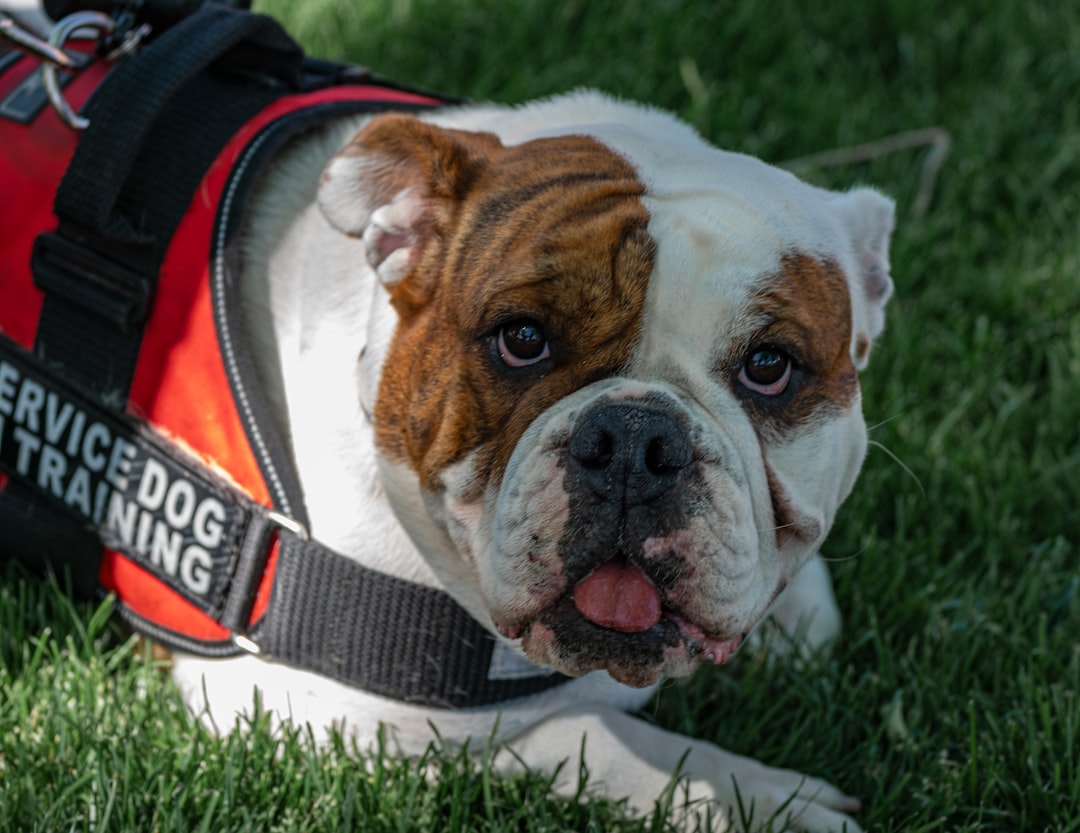
Alert work is the most scrutinized task a service dog performs. A diabetic alert dog that misses a hypoglycemic event, a seizure alert dog that gives a false positive in a grocery store, a PTSD dog that fails to interrupt a dissociative episode at a critical moment. These are not training failures that get buried in notes. They surface in real life, with real consequences. After 15 years of designing and evaluating alert tasks at TheraPetic® Healthcare Provider Group, I can tell you that the single most common structural error I see in alert training programs is uncritical reliance on fixed reinforcement schedules. Trainers get the behavior. They get consistency in a controlled setting. Then the alert degrades over months of deployment, and nobody can explain why. I can. And it starts with B.F. Skinner.
The Operant Foundation Every Alert Trainer Needs
Skinner's operant conditioning framework, built across decades of laboratory research and synthesized in works like The Behavior of Organisms and Science and Human Behavior, gave us the conceptual architecture that underlies every reinforcement decision I make. The core principle is elegant: behavior is a function of its consequences. What gets reinforced gets repeated. What stops producing reinforcement weakens. That is not a metaphor. It is a behavioral law with predictable, measurable outcomes.
Karen Pryor extended Skinner's laboratory work into applied animal training with precision that trainers still rely on in 2026. Her foundational text Don't Shoot the Dog translated schedule theory into actionable protocols for dogs, marine mammals and humans alike. What Pryor identified, and what I see confirmed every week in my own training sessions, is that the schedule by which reinforcement is delivered matters as much as the reinforcement itself. You can have the most potent food reward in your treat pouch and still build a fragile behavior if the delivery schedule is poorly designed.
Susan Friedman, PhD, at Utah State University, brought behavior analysis into the animal welfare conversation with her Humane Hierarchy and her emphasis on antecedent arrangement. Her work reminds me that schedule design is not just a performance question. It is an ethical one. A dog whose alert behavior has been weakened by poor schedule design may face handler frustration, repeated corrections or removal from service. Getting the schedule right from the start protects both the animal and the handler relationship.
Alert tasks operate within this operant framework. The dog detects a stimulus. A biochemical shift, a pre-seizure cortical change, a handler's escalating physiological stress signature. And performs a trained behavior that interrupts or signals that event. That behavior is reinforced. The question that separates average alert programs from durable ones is: reinforced on what schedule, and what happens to that schedule across the months and years of a dog's working career?
The Fixed Ratio Problem in Alert Task Design
A fixed ratio schedule (FR) delivers reinforcement after a predictable, set number of responses. FR-1 means every correct response is reinforced. Continuous reinforcement. FR-5 means every fifth correct response earns a reward. The predictability that makes fixed ratio schedules useful for initial acquisition is exactly what makes them dangerous for long-term alert maintenance.
During initial shaping, continuous reinforcement (FR-1) is appropriate and necessary. I use it deliberately when introducing a novel alert behavior. A nose poke to the thigh for hypoglycemia alert, a front paw press for a disruption task, a sustained chin rest for an anxiety cascade signal. The dog needs clear, immediate feedback that the behavior is correct. FR-1 provides that feedback with maximum clarity.
The problem emerges when trainers fail to transition away from FR-1 once the behavior is established. A dog working on FR-1 in a real-world alert context will encounter conditions where reinforcement is delayed or unavailable. The handler is in a meeting, the reward pouch is left in the car, the alert occurs at 2 a.m. during a hypoglycemic episode that impairs the handler's response speed. The behavior that has only ever been reinforced on a continuous schedule will weaken rapidly under those conditions. This is not a flaw in the dog. It is a predictable outcome of schedule design.
Fixed ratio schedules also produce a well-documented behavioral artifact called the post-reinforcement pause. After receiving a reward at a fixed interval, the organism reduces response rate before climbing back toward the next reinforcement point. In most task contexts this is a minor inefficiency. In alert work it can translate to a real-world gap where the dog has received its reward for a correct alert and momentarily disengages from the handler's biochemical environment. For diabetic alert specifically, that gap could matter.
Why Variable Ratio Schedules Produce Reliable Alerts
Variable ratio schedules (VR) deliver reinforcement after an unpredictable number of correct responses, built around an average. A VR-5 schedule reinforces approximately every fifth correct response, but the dog cannot predict which response will earn the reward. It might be the second. It might be the ninth. That unpredictability is not cruelty. It is the mechanism that produces the most robust, most persistent behavior in the operant toolkit.
Skinner's own research demonstrated that variable ratio schedules produce the highest rates of responding and the greatest resistance to extinction. Pryor applies this directly to animal training, noting that slot machines operate on variable ratio schedules because that schedule produces the most persistent behavior in humans. The parallel is direct. A dog working on a VR schedule does not know when the next reinforcement is coming, so it maintains consistent, high-rate responding. Applied to alert tasks, this means the dog continues scanning and signaling at a reliable rate even when reinforcement does not immediately follow a correct alert.
In my own alert training work, I begin transitioning from FR-1 to a thin variable schedule once the dog demonstrates three consecutive training sessions with consistent alert form, correct stimulus discrimination and no prompting. I do not jump to VR-10 overnight. I move through a deliberate thinning protocol: FR-1, FR-2, VR-3, VR-5, with behavioral data collected at each stage to ensure the response rate and form are maintained before moving further. Rushing that transition is the second most common error I see after the failure to transition at all.
The alert behaviors I train at officialservicedog.com Training Plus are evaluated not just on form but on latency and persistence. A dog that gives a correct alert but abandons the behavior after 8 seconds if the handler does not respond has not been trained for real-world deployment. Real handlers are sometimes sleeping, distracted or temporarily incapacitated. The alert behavior needs to persist. Variable ratio training builds that persistence structurally.
The Extinction Threat and How I Prevent It
Extinction occurs when a previously reinforced behavior is no longer followed by reinforcement and the response rate declines to baseline or zero. In laboratory settings, extinction is controlled and predictable. In a service dog's working life, extinction pressure is constant and unpredictable.
Consider the diabetic alert dog working with a handler whose glucose regulation has improved significantly through medication changes. The dog alerts less frequently because there are fewer genuine events to alert to. The handler, misreading behavioral quietness as training regression, begins to doubt the dog's reliability. If the training history is built on a fixed schedule with no extinction-resistance built in, the dog's alerting behavior may actually weaken during this lower-demand period. This is extinction by infrequency. The real-world stimulus is presenting less often, reinforcement follows less often and the behavior thins.
Friedman's antecedent arrangement framework gives me a practical tool here. I build regular simulated alert opportunities into a working dog's maintenance schedule specifically to provide reinforcement contact with the target behavior even during low-demand periods. For diabetic alert dogs, this means periodic use of scent training aids derived from hypoglycemic samples to maintain the olfactory discrimination chain and provide reinforcement opportunities independent of actual glucose events.
The variable ratio history also provides a buffer against extinction that fixed schedules cannot. Because the dog working on VR has learned that reinforcement is intermittent by design, the absence of immediate reward does not signal extinction the way it would for a dog trained on FR-1. The dog maintains the behavior longer before weakening. That gap, that extended persistence before behavioral decline, is what keeps a real-world alert dog functional across the unpredictable conditions of actual deployment.
Maintaining Alert Reliability Over Years of Real-World Work
The working lifespan of a well-deployed service dog is eight to ten years. Alert behaviors trained in year one must remain reliable in year seven. That is not an optimistic aspiration. It is a clinical necessity when the alert task is tied to a handler's medical safety.
I design maintenance protocols in explicit phases. The first phase covers months one through twelve of deployment and focuses on schedule thinning and real-world generalization. The second phase, years two through four, focuses on schedule maintenance and drift prevention. Behavioral drift, subtle changes in alert form, latency or persistence that accumulate gradually, is the dominant threat in this phase. I document baseline video of the alert behavior at deployment and review it against current performance annually. What the handler habituates to over two years of daily work, video comparison reveals clearly.
The third phase, years five through end of working career, adds a proactive attention to handler skill maintenance alongside the dog's behavioral maintenance. By year five, most handlers have unconsciously developed compensatory habits. Moving toward the dog before the alert is complete, reaching for a treat at the first ear flick rather than waiting for the full behavior. These handler behaviors inadvertently shift the reinforcement contingency and can reshape the alert behavior over time. I address this directly in annual handler consultations, reviewing handler mechanics the same way I review the dog's performance data.
Pryor's concept of the "keep going signal" (KGS) is relevant here. A conditioned reinforcer delivered mid-behavior to indicate the dog is on the right track and reward is forthcoming serves as a bridging tool that extends behavioral persistence without requiring primary reinforcement at every step. For alert tasks with natural duration requirements, a dog that must hold an alert position until the handler acknowledges, the KGS allows me to reinforce persistence explicitly rather than relying on the dog to maintain the behavior without feedback.
Practical Schedule Design for Alert Task Training
Trainers who want to build structurally sound alert tasks need a clear protocol framework. Here is what I actually use, adapted from Skinnerian schedule principles and refined through 15 years of real deployment outcomes.
- Acquisition phase: FR-1 only. Every correct alert form earns primary reinforcement immediately. No exceptions until the behavior is fluent across three consecutive consistent sessions.
- Early thinning phase: Move from FR-1 to FR-2, then FR-3. Monitor response rate and form at each step. Any degradation triggers a return to the previous schedule ratio, not a correction.
- Variable schedule introduction: Transition from fixed to variable by building in deliberate unpredictability around the established fixed ratio. FR-3 becomes VR-3, with individual trial reinforcement decisions made by the trainer, not the dog.
- Thinning to deployment schedule: Move toward VR-5 or VR-8 as the working maintenance schedule. The target ratio depends on the alert frequency natural to that dog's handler, the strength of the dog's reinforcement history and the clinical stakes of the alert task.
- Maintenance scheduling: Conduct formal alert training sessions at minimum once per week throughout the dog's working career. These sessions are not remedial. They are scheduled reinforcement contact that prevents extinction pressure from accumulating.
- Annual behavioral audit: Document alert form, latency and persistence against baseline video. Flag drift before it becomes a reliability problem.
The IACP (iacpdogs.org), through which I hold my CSDT credential, emphasizes evidence-based training methodology precisely because alert task reliability has direct safety implications. Schedule design is not a stylistic choice. It is a clinical decision with measurable outcomes in a dog's long-term behavioral health and a handler's physical safety.
If you are evaluating an alert dog program, whether as a trainer, a handler, a prescribing clinician or a program director, ask about the reinforcement schedule used through acquisition and into maintenance. If the answer is continuous reinforcement with no documented thinning protocol, that program is producing alert behaviors that will degrade. It is not a question of whether. It is a question of when.
Getting this right from the start, and maintaining it with the same discipline that clinical providers apply to medication management, is what separates alert work that holds across a dog's career from alert work that impresses in the training room and fails in the field.