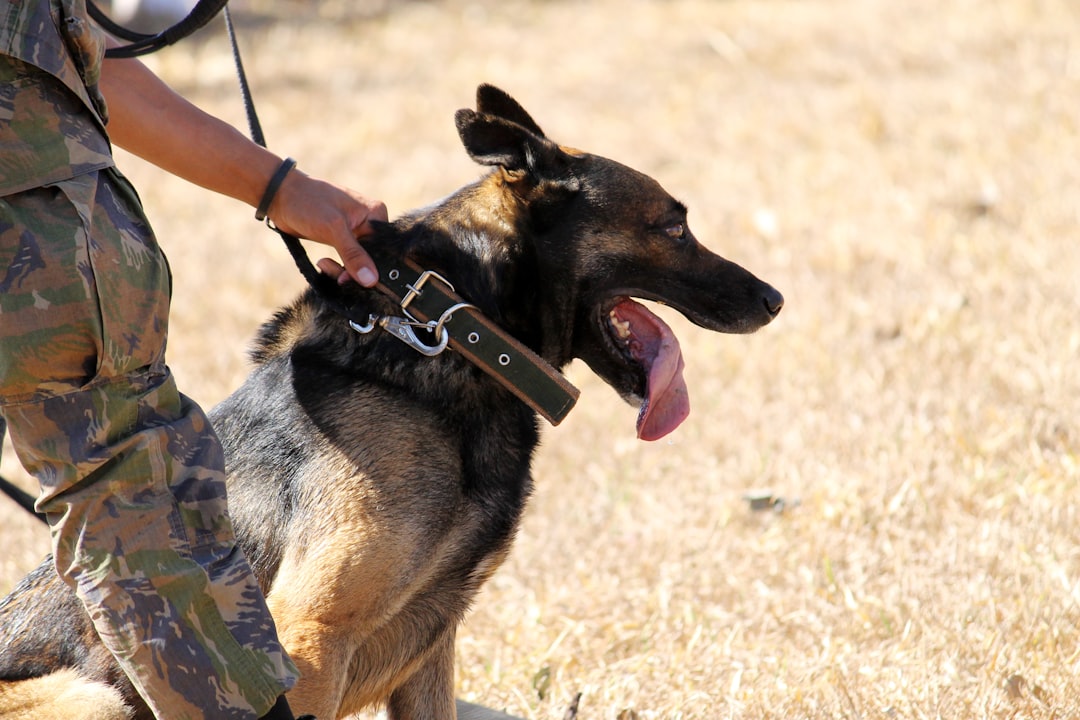
I have been training service dogs for more than fifteen years. In that time I have watched the commercial vest industry grow into something that genuinely harms the people it claims to serve. Bright orange patches. Laminated ID cards. Vests printed with "SERVICE DOG" in block letters. All of it available online, no questions asked, for under thirty dollars. No training records required. No disability documentation required. No accountability of any kind.
I do not sell service dog vests without documentation. That is not a policy I adopted casually. It is a position built from fifteen years of watching what happens when vests circulate without the training records to back them up. The short version: disabled handlers suffer, public access erodes and the professional training community loses credibility it spent decades earning.
This article is my full explanation of why I hold that line, what the ADA actually says about service dog vests, and what the responsible path forward looks like for trainers, handlers and healthcare providers who work in this space.
The Commercial Vest Industry Is Built on Ambiguity
Search any major e-commerce platform for "service dog vest" and you will find hundreds of listings. The listings do not ask whether your dog has completed task training. They do not ask whether the purchaser has a qualifying disability. They do not ask whether anyone has ever evaluated the dog's temperament, obedience foundation or public behavior. They sell the vest and they move on.
That ambiguity is not an accident. It is the business model. The commercial vest market profits from the legal gray zone created by the fact that federal law does not mandate any specific identification for service animals. Sellers exploit that gap aggressively. They frame their products as "legal" and "compliant" because technically no law prohibits owning a vest. What those sellers never explain is the difference between legality and legitimacy.
Legality means the transaction is not a crime. Legitimacy means the dog behind the vest actually meets the behavioral and task criteria that federal law establishes for service animal status. Those are entirely different things and the commercial vest industry has spent years blurring the line between them.
I hold a CSDT credential issued by the International Association of Canine Professionals, one of fewer than ten active credentials of that designation worldwide. From that professional vantage point, selling a vest to anyone who requests one looks less like retail and more like issuing a medical credential to someone who has never attended medical school. The credential implies something about the holder. When the credential lies, the entire system breaks down.
What the ADA Actually Says About Identification
The Americans with Disabilities Act does not require a service animal to wear a vest, display an ID card or carry any form of documentation. That is stated plainly in guidance published by the U.S. Department of Justice. You can read the current ADA guidance directly at ADA.gov.
Under current federal law, a business or public accommodation may ask only two questions when the disability is not obvious: whether the animal is a service animal required because of a disability and what work or task the animal has been trained to perform. That is the complete permissible inquiry. No vest required. No ID required. No registration required.
This is the legal reality that vest sellers weaponize in their marketing. They imply that a vest confers legitimacy. It does not. A vest is fabric. It communicates nothing about whether the dog wearing it has been trained to perform a specific task, whether the handler has a qualifying disability or whether the animal can behave appropriately in a public environment without becoming a threat to other patrons or the handler's own safety.
The law's restraint in requiring documentation was designed to protect disabled handlers from burdensome credential demands. That protection is being systematically undermined by a market that uses the absence of requirements to sell access rather than training.
Why a Vest Without Training Records Is a Liability
When I say "liability" I am not speaking loosely. I mean it in several distinct senses: legal liability, safety liability and reputational liability.
On the legal side, a handler who places a vest on an untrained dog and enters a public accommodation is representing to that business that the animal qualifies as a service animal under federal law. If the dog is not trained to perform a specific task mitigating a disability, that representation is false. Depending on the jurisdiction and the specific circumstances, it can constitute fraud or misrepresentation. Several states have passed service animal fraud statutes with civil and criminal penalties. The vest does not protect the handler from those consequences. It just makes the misrepresentation more visible.
On the safety side, an untrained dog in a public space is an unpredictable dog. I have responded to documented incidents where dogs purchased with vests from online retailers bit customers in grocery stores, urinated in hospital corridors and lunged at children in restaurants. The vest did not prevent any of those incidents because the vest had nothing to do with training. It was a costume placed on an animal that had no behavioral preparation for the stress of a public environment.
On the reputational side, every incident involving a vested untrained dog contributes to what I call access erosion. Business owners who have had a bad experience with a poorly behaved "service dog" become more resistant to all service animal access claims, including those from legitimately trained teams. The handlers who suffer most are disabled individuals with genuine medical needs who encounter heightened skepticism, refusals and confrontations that the law was specifically written to prevent.
Training records matter because they create an evidentiary trail. They document the specific tasks a dog has been trained to perform, the behavioral benchmarks the dog has met and the professional who oversaw the training. When an incident occurs, those records are the difference between a handler who can demonstrate compliance and a handler who cannot. Selling a vest without requiring any records to exist is selling the appearance of compliance while leaving the handler exposed.
What Legitimate Trainers Do Instead
The trainers I respect in this industry do not lead with vests. They lead with behavior.
At OfficialServiceDog.com Training Plus, the framework I use starts with a behavioral evaluation of the dog, an assessment of the handler's documented disability and a structured task training protocol matched to the specific disability-related need. The vest, if one is used at all, comes at the end of that process. It is not the entry point. It is a gear choice made after the dog has demonstrated readiness.
Legitimate trainers maintain training logs that document session dates, tasks practiced, behavioral benchmarks achieved and any issues identified. Those logs are not bureaucratic overhead. They are professional evidence. They allow a trainer to stand behind the team they have certified. They allow a healthcare provider to correlate the animal's trained tasks with the client's documented diagnosis. They create the chain of accountability that the vest industry systematically avoids.
The International Association of Canine Professionals and the Certification Council for Professional Dog Trainers both publish competency standards that credentialed trainers are expected to maintain. Those standards exist precisely because the industry recognized that credentials without documentation are meaningless. The same logic applies to vests.
What I do at TheraPetic® Healthcare Provider Group, a 501(c)(3) nonprofit healthcare organization, is coordinate the clinical and training sides of this process. Our clinical team works with licensed healthcare providers to document the disability-related need. Our training team documents the task training. When those two documentation streams converge, we have a complete picture of legitimacy. A vest, if the handler chooses to use one, represents that convergence. It does not create it.
The Real-World Cost of Vest Fraud on Disabled Handlers
I want to be specific about who gets hurt when vests circulate without documentation, because the abstract language of "access erosion" can obscure real human cost.
A veteran with PTSD who relies on a psychiatric service dog to interrupt dissociative episodes should be able to enter any public accommodation in the country without confrontation. When that veteran encounters a restaurant manager who has been burned three times by vested dogs that urinated on the floor or growled at staff, the manager's skepticism is not irrational. It is a trained response to repeated bad experiences, experiences that the commercial vest industry made possible.
A child with autism whose service dog performs deep pressure therapy or interrupts self-injurious behavior should be able to accompany that dog to school without a principal demanding impossible levels of documentation. When schools and other institutions have been pressured by fraud incidents into policies that exceed what federal law allows, legitimate handlers face bureaucratic obstruction that can delay or deny access for months.
These are the populations the commercial vest industry is harming. Not in some theoretical future scenario but right now, in interactions that happen daily across the country. The handlers who are most vulnerable, those with the most serious disabilities and the most need for reliable public access, bear the heaviest burden of the fraud that vests without training enable.
My Position and Why It Will Not Change
I will not sell a service dog vest to anyone who cannot produce training records. That is my line and I have held it for fifteen years. I have turned away customers who argued with me about it. I have declined transactions that would have been profitable. I will continue to do so.
The argument I hear most often is that the ADA does not require documentation so I have no right to ask for it. That argument misunderstands what I am doing. I am not acting as a public accommodation enforcing ADA access rights. I am a trainer making a professional decision about what I will attach my credential and my organization's reputation to. A credentialed trainer has every right, and in my view a professional obligation, to ensure that the equipment they sell is matched to animals that have earned the right to wear it.
The CSDT credential I hold is not a participation ribbon. It represents a specific standard of technical knowledge, professional judgment and ethical conduct. When I sell a vest, that transaction carries an implicit signal that I have assessed the team and found it to meet the standard. If I sell vests indiscriminately, I am issuing that signal without any basis for it. That is professionally irresponsible in a way that I am not willing to accept.
I recognize that the broader vest market will not change because I hold this position. The commercial sellers are not constrained by professional credentials and they are not motivated by the welfare of disabled handlers. They are motivated by revenue. That reality does not change my calculus. The trainers who hold credentials, who are embedded in the professional organizations that set standards for this industry, are the ones who have to model what responsible practice looks like. If we abandon that responsibility because the commercial market has already abandoned it, we have nothing left to stand on.
Training documentation is not a bureaucratic requirement. It is evidence that a dog and handler team has done the work necessary to operate safely in the public spaces that federal law guarantees them access to. I will keep asking for it. I will keep refusing to sell without it. And I will keep explaining why to anyone who asks.